Introduction: This article provides IT managers and procurement staff preparing to purchase servers with a “Guide to Identifying Korean Counterfeit Servers and Risk Analysis Recommendations Before Purchase.” The article focuses on key identification points, technical inspection methods, as well as legal compliance and security risks, aiming to help decision-makers make comprehensive judgments and manage risks before making purchases.
Korean counterfeit servers usually refer to complete servers or components sold without the original manufacturer’s authorization, with a similar appearance or modified parts. Such products may mix refurbished parts, non-original parts, or counterfeit labels. Although they may appear to have similar functions on the surface, there are significant differences in performance, reliability, and after-sales support, requiring careful identification and evaluation.
Common characteristics include inconsistent labels or serial numbers, poor-quality packaging and instructions, abnormal font or coding on manufacturing labels, obvious weld marks and screw traces on the casing, as well as irregular sales channels. When identifying, a comprehensive judgment should be made by combining appearance, documentation, and technical information, avoiding drawing conclusions based on a single detail alone.
It is recommended to check the serial numbers on the chassis label, motherboard, and hard drive, and verify them through the manufacturer’s official website or authorized channels. Use the motherboard BIOS information and hardware identification tools to verify that the device model and serial number match. If any discrepancies are found or no record exists in the manufacturer’s database, be cautious and ask the seller for further proof.
Check the firmware version and signature status, and examine the boot logs and device management information for any anomalies or signs of tampering. Compare with the firmware version and checksum released by the manufacturer to avoid using images of unknown origin. Perform basic verification on the network interface MAC prefix, driver compatibility, and startup process to prevent potential backdoors or stability issues.
Verify whether the seller is an authorized manufacturer’s agent or distributor, and examine the invoices, import documents, and warranty terms. Proof of purchase and test reports are required; if necessary, machine inspection should be conducted by a third-party testing agency. Transparent supply chains and proper trade documents are key to reducing procurement risks.
Buying or using counterfeit devices may involve legal risks such as infringement of rights, smuggling, or violations of import regulations, and after-sales support and warranties are usually not guaranteed. Before making purchases, companies should assess their compliance obligations and potential penalty risks, and specify breach, liability, and recourse clauses in the contracts to protect their own interests.
Counterfeit servers often suffer from poor component compatibility, uncontrollable lifespan, and substandard cooling and power supply designs, which affect their long-term usability. Furthermore, unaudited firmware or aftermarket modules may pose security risks such as backdoors, data leaks, or difficulty in applying patches; rigorous risk assessment and security testing should be conducted before deployment.
It is recommended to prefer manufacturer-authorized channels, requiring on-site machine inspection or a video of the device being tested under power ; Sign detailed acceptance and warranty terms, and use third-party escrow or fund custody services to reduce transaction risks. Be highly skeptical of offers with abnormally low prices or requests for payment in advance, and keep all transaction records for traceability.
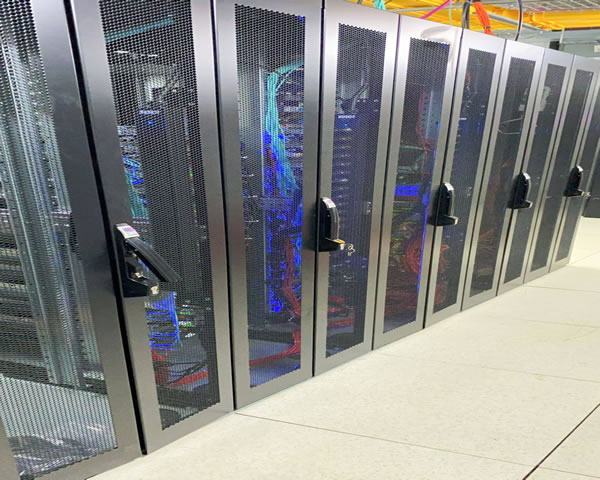
Summary: Before purchasing, be sure to refer to this “Guide to Identifying Fake Korean Servers and Risk Analysis Recommendations Before Purchase,” and verify each aspect in detail from five dimensions: appearance, serial number, firmware, supply chain, and legal compliance. Adopt a conservative strategy of refusing to purchase suspicious devices or requesting further verification, and prioritize using legitimate channels and authorized products to reduce long-term operational and legal risks.
- Latest articles
- Risk Control Strategy Research: Methods To Prevent Blacklisting And Abnormal Behavior From Korean Dynamic Native IPs
- A Detailed Explanation Of The Price Range For Different Bandwidth And Configuration Costs For Hosting Servers In The US
- How To Assess The Long-term Service Stability Of Hong Kong Aide's Data Center
- How To Leverage Indian VPS And Thai VPS To Achieve Global User Distribution And Accelerate Deployment
- How To Assess The Quality Of Third-party VPS Management Services In Hong Kong Through SLAs
- Research On Improving The Accuracy Of Vietnamese Native IP In Mobile Advertising Targeting
- The Low-latency Connection Strategy Helps Malaysian Cloud Servers Provide A Better Experience For Asia-Pacific Users
- High-availability Architecture Design For US High-defense Servers And Card Games From An Operations And Maintenance Perspective
- From Bandwidth To Hard Drive Read/write Metrics, It Is Crucial To Assess The Impact Of Cambodia's Junk Servers On Business
- A Guide To Leasing Server Vendors For Small And Medium-sized Enterprises In Vietnam, Evaluating Cost-effectiveness And Scalability
- Popular tags
-

Common Tools And Websites For Finding Korean Dedicated Server Addresses
This article introduces common tools and websites for finding Korean dedicated server addresses to help users quickly obtain relevant information. -
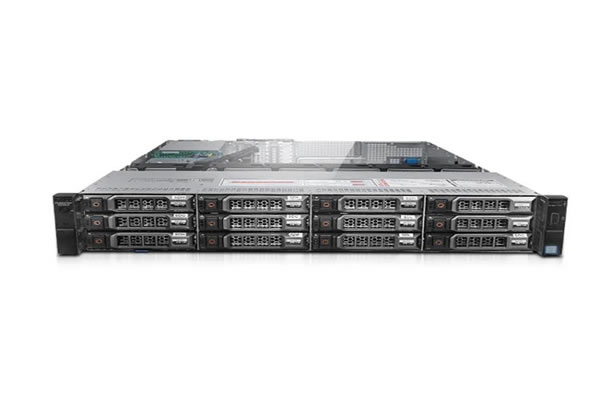
From Site Group Structure To Keyword Layout, Look At The Whole Process Of How Korean Site Groups Rank.
this article systematically explains the entire process of how to rank korean website groups, covering website group structure design, domain name and server distribution, korean keyword research, content localization, internal and external link strategies, data monitoring and iteration, and other implementation methods. -

How To Effectively Use Korean Native Home IP Proxy To Improve Network Experience
This article discusses how to effectively utilize Korean native home IP agents to improve the network experience and provide practical strategies and suggestions.